
how to manually lock a garage door

Securing your garage is vital for home safety, as it’s a frequent entry point for intruders․ This guide explores methods for manually locking your garage door, enhancing security․

Understanding proper locking techniques, utilizing tools, and maintaining mechanisms are key to preventing break-ins and protecting your property, as highlighted by recent discussions․

Software updates and forum discussions emphasize the importance of a robust garage door security system, going beyond automated openers for comprehensive protection․

Why Manual Locking is Important

While garage door openers offer convenience, relying solely on them presents a security risk․ Manual locking provides a crucial secondary layer of defense against potential break-ins, as discussed in online security forums․

Electronic systems can fail due to power outages or malfunctions, leaving your garage vulnerable․ A physical lock ensures security even when technology fails, offering peace of mind․

Furthermore, determined intruders may bypass or disable electronic mechanisms․ Manual locks, especially reinforced ones, significantly increase the effort and time required for unauthorized access, deterring criminal activity․

Recent reports highlight the garage door as a common entry point, making manual locking a proactive step towards safeguarding your home and belongings․

Understanding Garage Door Security Vulnerabilities

Garage doors often present vulnerabilities due to their size and accessibility․ Weak points in construction, like hinges and panels, can be exploited by intruders, as noted in security discussions․

Standard garage door openers can sometimes be compromised with readily available devices, bypassing security features․ This emphasizes the need for supplemental security measures․

Older doors may lack modern security features, making them easier targets․ Additionally, leaving garage door openers visible inside vehicles is a common mistake that invites theft․

Understanding these vulnerabilities is the first step towards reinforcing your garage’s security, making it a less attractive target for potential break-ins․

Types of Garage Doors and Locking Mechanisms

Different garage door types—sectional, up-and-over, and roller—require unique locking approaches․ Understanding these mechanisms is crucial for effective manual security implementation․

Each style features distinct locking points and handle securing methods, impacting how you reinforce them against potential intrusions․

Sectional Garage Doors ⎻ Locking Points

Sectional doors, composed of hinged panels, typically feature multiple locking points along the door’s sides․ These points engage with the vertical tracks, providing a secure hold when manually locked․

Often, a central locking mechanism exists, activated by a key or slide bolt․ Ensure all side locks are firmly engaged before securing the central lock for maximum protection․ Regularly inspect these locking points for wear and proper alignment, as discussed in security forums․

Consider adding a padlock for extra security, utilizing the existing locking points or installing a dedicated bolt for enhanced resistance against forced entry․

Up-and-Over Garage Doors ― Securing the Handle

Up-and-over doors generally rely on a central handle mechanism for locking․ This handle, when operated, typically engages a bolt or latch into the floor or chassis, securing the door․

Confirm the handle is fully locked and that the bolt is firmly seated․ Supplement this with a padlock through the handle itself or around the door’s lifting arms for increased security, as recommended in online forums․

Regularly check the handle’s functionality and the integrity of the locking mechanism, ensuring smooth operation and preventing potential vulnerabilities․

Roller Garage Doors ― Specific Locking Considerations

Roller doors often feature multiple locking points along the curtain’s sides, typically operated by a central locking system․ Manually securing these requires engaging each locking point individually, ensuring a tight fit against the guide rails․

Padlocks are particularly effective on roller doors, used through the guide rails or on designated locking plates․ Prioritize weatherproof padlocks for durability, as discussed in security forums․

Inspect the curtain’s alignment within the rails; any gaps compromise security․ Regularly test each locking point for smooth operation and consider security bars for added reinforcement․

Essential Tools for Manual Garage Door Locking

Screwdrivers, wrenches, and robust padlocks are crucial for manually securing your garage․ These tools enable tightening bolts and installing effective locking mechanisms․

Lubricants, while not locking tools, maintain mechanism functionality, preventing sticking and ensuring smooth operation, as highlighted in maintenance discussions․

Screwdrivers ⎻ Types and Uses

Various screwdrivers are essential for garage door locking maintenance․ Flathead screwdrivers adjust strike plates and loosen older screws, while Phillips head screwdrivers tighten newer fasteners commonly found in modern locking systems․

Security screws, often featuring unique head patterns, require specialized bits to prevent tampering․ A multi-bit screwdriver offers versatility, handling different screw types efficiently․ Regularly check and tighten all screws on locking mechanisms, hinges, and brackets․

Proper screwdriver size prevents stripping screw heads, ensuring a secure fit․ Using the correct type and size is vital for effective manual locking and overall garage door security․

Wrenches ― For Bolt Tightening

Wrenches are crucial for tightening bolts securing garage door locking mechanisms, reinforcing their strength against forced entry․ Adjustable wrenches accommodate various bolt sizes, offering flexibility during maintenance․ Socket wrenches, with interchangeable sockets, provide a secure grip and efficient tightening․

Focus on bolts connecting the locking bars, strike plates, and reinforcement brackets․ Regularly inspect and tighten these bolts, as loosening can compromise security․ Ensure the wrench fits snugly to avoid rounding bolt heads․

Using the correct wrench size and applying firm, even pressure are vital for a secure and reliable locking system․

Padlocks ― Choosing the Right Security Level

Selecting the appropriate padlock is paramount for manual garage door security․ Consider shackle size – a longer shackle offers versatility but may be more vulnerable․ Look for hardened steel padlocks resistant to cutting, drilling, and prying․

Weatherproof padlocks are essential to withstand outdoor conditions, preventing rust and ensuring smooth operation․ Higher security ratings indicate increased resistance to attacks․ Disc detainers and laminated steel bodies offer superior protection․

Prioritize padlocks with anti-pick features and consider combination locks for keyless convenience, though security levels vary․
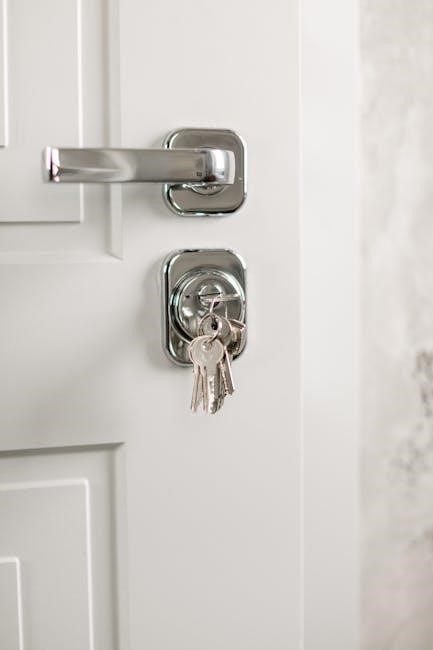
Step-by-Step Guide to Manually Locking a Garage Door

First, engage side locks for initial security․ Next, secure the central locking mechanism․ Finally, utilize a garage door bolt for maximum protection, ensuring a firm hold․

Engaging the Side Locks

Most garage doors feature side locks, often slide bolts, located along the door’s vertical tracks․ These are your first line of defense when manually securing your garage․ Locate these locks on both sides of the door and slide them into the track’s slots․

Ensure both side locks are fully engaged; a partial lock offers minimal resistance․ This prevents the door from being easily lifted or forced open from the outside․ Regularly check these locks for smooth operation, lubricating if necessary, as discussed in maintenance forums․

Securing the Central Locking Mechanism

Many garage doors possess a central locking mechanism, often a keyed cylinder or a slide lock positioned centrally at the door’s base․ This lock directly secures the door panel itself, adding another layer of protection beyond the side locks․

Engage this central lock using its key or sliding mechanism․ Confirm it’s fully locked, preventing the door from being pried open․ Online forums highlight the importance of this step, especially when combined with side lock engagement, for robust security․

Using a Garage Door Bolt

For enhanced security, consider installing a garage door bolt – a heavy-duty locking mechanism that secures the door to the track or frame․ These bolts typically require a key or padlock for operation, providing a significant deterrent to potential intruders․

Position the bolt strategically, ensuring it engages firmly with the receiving bracket․ Regularly inspect the bolt and bracket for wear or damage․ Online resources emphasize that a robust bolt, combined with other locking methods, dramatically increases garage security․

Reinforcing Your Garage Door Security

Boost security by adding deadbolts, security bars, and strengthening hinges․ These upgrades, discussed in security forums, create a formidable defense against forced entry․

Prioritize robust hardware and proper installation for maximum effectiveness, complementing manual locking methods for comprehensive protection of your property․

Installing a Deadbolt Lock

A deadbolt lock significantly enhances garage door security, offering a robust barrier against intrusion․ Installation typically involves drilling to accommodate the bolt and strike plate, ensuring precise alignment for smooth operation․

Choose a high-quality deadbolt with a hardened steel bolt for maximum resistance to tampering․ Secure the strike plate with long screws that reach into the garage door frame’s stud for increased strength․

Consider a keyless entry deadbolt for convenience, but always maintain a physical key as a backup․ Regularly test the deadbolt’s functionality and ensure it engages fully, complementing existing manual locking measures․

Adding a Garage Door Security Bar

A garage door security bar provides an additional layer of defense, physically blocking the door from being opened, even if the locking mechanism is compromised․ These bars typically brace against the door and the floor, creating a strong point of resistance․

Select a bar constructed from durable steel, ensuring it’s adjustable to fit your garage door’s width․ Proper installation involves securely positioning the bar and tightening any adjustment mechanisms․

Regularly inspect the bar for any signs of damage or wear․ Combining a security bar with a deadbolt and side locks offers a comprehensive approach to securing your garage․

Strengthening Hinges and Brackets

Garage door hinges and brackets are critical structural components, and reinforcing them significantly enhances security․ Over time, these parts can weaken, making the door vulnerable to forced entry․ Replacing standard hardware with heavier-duty, reinforced versions is a proactive step․

Ensure all screws and bolts are tightened securely, and consider using longer screws for increased holding power․ Adding metal plates around the brackets can distribute force and prevent bending․

Regular inspection for rust or damage is crucial; addressing issues promptly maintains the door’s structural integrity and deters potential intruders․

Padlock Considerations for Garage Doors

Choosing the right padlock is crucial for manual garage door security․ Opt for weatherproof, high-security models with hardened steel shackles for maximum resistance to cutting and corrosion․

Proper placement, utilizing the door’s locking points, maximizes effectiveness, providing an additional layer of protection against potential break-ins․

Choosing a Weatherproof Padlock

When manually securing your garage, selecting a weatherproof padlock is paramount․ Garages are exposed to fluctuating temperatures and moisture, which can corrode standard locks, rendering them ineffective․ Look for padlocks specifically designed to withstand harsh weather conditions, featuring coated bodies and shackle protectors․

Materials like stainless steel or brass are ideal, resisting rust and ensuring smooth operation․ Consider a padlock with a shrouded shackle to protect it from bolt cutters․ Prioritize locks rated for outdoor use, guaranteeing longevity and reliable security, even in challenging climates․ This proactive step significantly enhances your garage’s overall protection․

Padlock Shackle Size and Security

The shackle size of your padlock directly impacts its security when manually locking your garage․ A thicker shackle is considerably more resistant to cutting and bolt cropper attacks․ Opt for a shackle made of hardened steel for maximum protection against physical force․

Consider the space available on your garage door’s locking points; a longer shackle offers versatility but may be more vulnerable․ Shrouded shackles provide added security by concealing the bolt-cutting area․ Prioritize a balance between shackle size, material, and the specific vulnerabilities of your garage door setup․

Proper Padlock Placement

Strategic padlock placement is crucial when manually securing your garage door․ Position the padlock as high as possible, making it harder for leverage attacks․ Avoid easily accessible locations; the goal is to make cutting or breaking the lock difficult and time-consuming․

Ensure the shackle loops through both locking points on the door, preventing it from being pried open․ Consider using a garage door security bar in conjunction with a padlock for enhanced protection․ Regularly inspect the placement for any signs of tampering or weakness․

Troubleshooting Common Locking Issues

Sticking locks often respond to lubrication, while broken mechanisms may require repair or replacement․ Misaligned strike plates need careful adjustment for smooth operation and security․

Sticking Locks ― Lubrication Solutions

When encountering a sticking garage door lock, the first step is often applying a suitable lubricant․ Avoid using oil-based products, as they can attract dust and grime, worsening the issue over time․ Instead, opt for a silicone-based lubricant or a dry graphite spray․

Carefully apply the lubricant directly into the lock cylinder and any moving parts, working the key or locking mechanism back and forth to distribute it evenly․ Repeat this process several times, and then test the lock’s functionality․ If the sticking persists, consider a more thorough cleaning before re-lubricating․

Remember that consistent lubrication, as part of a regular maintenance schedule, can prevent these issues from arising in the first place, ensuring smooth and reliable operation․

Broken Locking Mechanisms ― Repair or Replace

If your garage door’s locking mechanism is broken, assess the damage carefully․ Minor issues, like a loose bolt, might be repairable with basic tools․ However, significant damage, such as a cracked lock housing or broken internal components, usually necessitates replacement․

Attempting complex repairs without the proper expertise can compromise security․ Consider consulting a professional locksmith or garage door technician for assistance․ Replacing the entire mechanism is often the most reliable long-term solution, ensuring optimal security․

Prioritize a quality replacement part to avoid future failures and maintain the integrity of your garage door’s security system․

Misaligned Strike Plates ⎻ Adjustment Techniques

A misaligned strike plate prevents the locking mechanism from engaging correctly, reducing security․ Begin by loosening the screws securing the strike plate․ Gently reposition it until it aligns perfectly with the bolt or latch․ Tighten the screws securely, ensuring the plate remains stable․

If adjustments are insufficient, the strike plate may require shimming․ Use thin cardboard or metal shims behind the plate to fine-tune its position․ Regularly check alignment, as garage door movement can cause shifts․

Proper alignment is crucial for effective manual locking and overall garage door security․

Garage Door Lock Maintenance

Regular lubrication of locking components prevents sticking and ensures smooth operation․ Inspect for wear, corrosion, and damage, replacing worn parts promptly for continued security․

Consistent maintenance, as discussed in forums, is vital for reliable manual locking and overall garage door functionality․

Regular Lubrication Schedule

Maintaining your garage door’s locking mechanisms through consistent lubrication is paramount for smooth operation and preventing future issues․ A quarterly schedule, utilizing a silicone-based lubricant, is recommended for all moving parts – side locks, central locking components, and bolt mechanisms․

Avoid oil-based lubricants, as they attract dust and grime, potentially causing more harm than good․ Focus on hinges, rollers, and the strike plate․ Following this schedule, as highlighted in online forums, ensures longevity and reliable security, preventing sticking and facilitating easy manual locking․

Regular checks, alongside lubrication, will identify potential problems early on․

Inspecting for Wear and Tear

Routine inspection of your garage door’s locking system is crucial for maintaining security․ Examine side locks, the central locking mechanism, and any added bolts for signs of rust, corrosion, or physical damage․ Check for loose screws or weakened brackets, as these compromise the locking integrity;

Pay close attention to the strike plates, ensuring proper alignment․ Online forums emphasize the importance of addressing even minor wear promptly, preventing potential break-in points․ Regular visual checks, combined with lubrication, contribute to a robust and reliable manual locking system․

Early detection saves on costly repairs․

Replacing Worn Components

When inspections reveal damaged or worn parts, immediate replacement is essential․ This includes corroded padlocks, stripped screws, or fractured locking mechanisms․ Utilize high-quality replacements designed for garage door security, ensuring compatibility with your door type․

Online resources and forums highlight the importance of using the correct tools for installation, preventing further damage․ Don’t hesitate to consult a professional if you’re unsure about the process․ Prioritizing component replacement maintains a strong, reliable manual locking system․

Proactive replacement is key to security․

Alternative Security Measures

Enhance garage security with sensors, alarms, and cameras for comprehensive monitoring․ Motion-activated lights deter intruders, complementing manual locks for robust protection․

These additions provide layers of defense, addressing vulnerabilities beyond the locking mechanism itself, as discussed in security forums․

Garage Door Sensors and Alarms

Integrating garage door sensors and alarms significantly elevates your home’s security profile․ These systems detect unauthorized activity, providing immediate alerts via smartphone or a central monitoring station․

Contact sensors, when affixed to the door and frame, trigger an alarm upon any breach․ Motion sensors inside the garage add another layer, detecting movement even with the door closed․

Wireless systems offer easy installation, while hardwired options provide greater reliability․ Combining these technologies with manual locking reinforces a multi-faceted security approach, deterring potential intruders and offering peace of mind․

Recent forum discussions highlight the effectiveness of these systems when paired with robust locking mechanisms․

Security Cameras for Garage Monitoring

Implementing security cameras focused on your garage provides a visual deterrent and crucial evidence in case of a break-in․ Strategically placed cameras capture activity around the door, driveway, and any potential access points․

Wireless cameras offer flexibility, while wired systems provide a more stable connection․ Features like night vision, motion detection, and remote viewing via smartphone are essential․

Cloud storage ensures footage is safe even if the camera is damaged․ Combining camera surveillance with manual locking creates a strong security perimeter, enhancing protection and offering valuable peace of mind․

Online forums emphasize the importance of visible cameras as a deterrent․

Motion-Activated Lighting

Installing motion-activated lights around your garage significantly deters potential intruders․ When movement is detected, bright lights illuminate the area, startling anyone attempting unauthorized access․

These lights are particularly effective at night, eliminating dark spots where criminals can operate unseen․ Consider lights with adjustable sensitivity and duration settings for optimal coverage․

Combining motion-activated lighting with a manually locked garage door creates a layered security approach․ This dual system provides both a physical barrier and a visible deterrent, enhancing overall protection․

Forum discussions highlight lighting as a simple yet effective security measure․

Garage Door Security Best Practices

Always keep your garage door opener out of sight, secure keys, and remain vigilant about your surroundings․ These habits bolster manual locking efforts․

Prioritize awareness and responsible practices alongside physical security measures for a safer home environment, as emphasized in security forums․

Never Leave Your Garage Door Opener in Plain Sight

Leaving a garage door opener visible inside your vehicle is a significant security risk, essentially handing a key to potential intruders․ This practice negates the benefits of manual locking and other security measures․ Discussions within online forums consistently highlight this vulnerability․

Even with a manually locked door, an easily accessible opener allows bypass of the physical security․ Store the opener securely within the vehicle, preferably in the glove compartment or center console, out of direct view․ Prioritizing this simple step dramatically reduces the chance of a break-in, complementing your manual locking routine․

Keep Garage Door Keys Secure

Similar to garage door openers, physical keys for manual locking mechanisms require diligent safeguarding․ Avoid leaving keys in obvious locations like under the doormat or in a nearby flowerpot – common spots targeted by burglars․ Online security forums repeatedly emphasize this basic, yet crucial, precaution․

Store keys inside your home, in a secure location inaccessible to outsiders․ Consider a lockbox with a combination, though choose a robust model and change the combination regularly․ Protecting your keys is paramount, reinforcing the effectiveness of your manual locking efforts and overall garage security․

Be Aware of Your Surroundings

Maintaining situational awareness is a critical, often overlooked, aspect of garage door security․ Before manually locking your garage, scan your surroundings for any suspicious activity or individuals․ Trust your instincts; if something feels off, delay locking and investigate further or contact authorities․

Recent forum discussions highlight the importance of neighborhood watch programs and reporting unusual behavior․ Being observant and proactive can deter potential intruders and contribute to a safer community․ A secure garage starts with a vigilant homeowner, actively engaged in their surroundings․

Understanding Garage Door Vulnerabilities to Break-ins

Garage doors present weak points in home security, often targeted by thieves․ Common techniques exploit construction flaws, making manual locking crucial for added protection․

Forums emphasize securing vulnerable areas, reinforcing the need for proactive measures beyond standard automated systems to deter potential intrusions․

Weak Points in Garage Door Construction

Garage doors, while convenient, possess inherent vulnerabilities․ Older models, or those with flimsy construction, are particularly susceptible to forced entry․ The door itself, especially around the locking points and hinges, can be pried open with relative ease․

Panels can be kicked in, and the track system can be manipulated․ Discussions on online forums highlight the importance of strengthening these areas․ Weaknesses also exist in the door’s connection to the frame, and the materials used – thinner doors offer less resistance․ Addressing these structural shortcomings is paramount for enhanced security․

Common Break-in Techniques

Thieves employ several tactics to breach garage doors․ A prevalent method involves using a coat hanger or similar tool to manipulate the emergency release cord, disengaging the automatic opener․ Prying open the door at the locking points, or forcing the panels, are also common approaches․

Kick-ins targeting weaker door sections are frequent, as are attacks on the track system․ Online forums detail how burglars exploit vulnerabilities․ Furthermore, gaining access through a connected, unlocked entry door is a significant risk, bypassing the garage door security altogether․

The Importance of a Secure Garage Door

A secure garage door is paramount, acting as the first line of defense against home invasions․ It safeguards not only vehicles and belongings but also provides a barrier to accessing the house itself․ Neglecting garage door security significantly increases vulnerability to theft and property damage․

Discussions on online forums consistently highlight the garage as a common entry point․ Reinforcing locking mechanisms, utilizing deadbolts, and maintaining awareness of surroundings are crucial steps․ A robustly secured garage contributes significantly to overall home safety and peace of mind․


real estate award pay guide

The Real Estate Award Pay Guide provides essential information on pay rates, entitlements, and compliance requirements for employers and employees in the real estate industry.

1.1 Purpose and Scope of the Guide

The Real Estate Award Pay Guide outlines pay rates, entitlements, and compliance requirements for employers and employees in the real estate industry. It ensures transparency and fairness by detailing minimum wages, allowances, overtime, and public holiday pay. The guide applies to full-time, part-time, and casual employees, covering roles like property sales, management, and strata/community title management. Its purpose is to help employers comply with Fair Work regulations, avoid legal issues, and maintain fair compensation practices.

1.2 Importance of Understanding the Award

Understanding the Real Estate Industry Award is crucial for ensuring compliance with Fair Work regulations and maintaining fair compensation practices. It helps employers avoid penalties, underpayment disputes, and legal issues. Accurate knowledge of pay rates, allowances, and entitlements ensures transparency and fairness in payroll management. This understanding also fosters trust between employers and employees, promoting a positive work environment and preventing potential disputes.

1.3 Recent Updates and Changes

Recent updates to the Real Estate Industry Award include the 2024 National Wage Case increases and the implementation of the 2025 Wage Theft Laws. These changes emphasize accurate payroll management and compliance with Fair Work regulations. Employers must stay informed about rate adjustments, new allowances, and payment requirements to avoid penalties. Regular reviews of the award document and Fair Work resources are essential to adapt to these changes and ensure fair compensation practices.

Key Concepts of the Real Estate Industry Award

This section introduces the core principles of the Real Estate Industry Award, detailing its application, coverage, and essential compliance requirements for employers and employees.

2.1 Definition and Coverage

The Real Estate Industry Award 2020 (MA000106) defines pay rates and conditions for employees in property sales, management, and related roles. It covers full-time, part-time, and casual workers but excludes managerial staff and those under the Clerks Private Sector Award. The award ensures fair compensation and outlines entitlements, including overtime and allowances, while providing clarity on who is covered and who is not. Consulting the award document is essential for specific details.

2.2 Who is Covered and Who is Not

The Real Estate Industry Award covers employees in roles like property sales, management, and support staff. It excludes managerial positions, business owners, and independent contractors. Those under the Clerks Private Sector Award or in non-core real estate roles may also be excluded. Employers must verify each employee’s classification to ensure compliance and avoid disputes, as incorrect classification can lead to legal issues and penalties. Proper understanding of coverage is crucial for accurate payroll management and fair compensation practices within the industry.

2.3 Minimum Wage Threshold and Commission Structures

The Real Estate Industry Award sets minimum wage thresholds for employees, ensuring fair compensation. Commission-only structures must meet the Minimum Income Threshold Amount (MITA), which for Level 2 employees is $67,474 annually (1 July 2024–30 June 2025). This ensures commission-only earnings align with minimum wage requirements. Employers must document commission agreements and ensure transparency to prevent underpayment. Compliance with these guidelines is crucial for maintaining fair pay practices and adhering to labor laws, promoting trust and equity in the workplace.

Employee Classifications and Levels

Employee classifications structure roles based on experience and responsibilities, with levels 1 to 4 defining pay rates and entitlements, ensuring fair compensation aligned with industry standards.

3.1 Real Estate Employee Levels (1 to 4)

Real Estate Employee Levels (1 to 4) define roles based on experience and responsibilities. Level 1 is for entry-level roles with basic tasks, while Level 2 involves greater independence. Level 3 is for senior roles requiring advanced skills, and Level 4 applies to in-charge positions with higher pay rates and responsibilities. Each level has specific hourly rates, ensuring fair compensation aligned with industry standards and employee expertise.

3.2 Junior Rates and Progression

Junior rates apply to employees in their first few years of employment, with pay increasing as they gain experience. The Real Estate Industry Award specifies progressive rates for juniors, ensuring fair compensation as they develop skills. For example, an employee under 21 may start at a lower rate, with incremental increases over time. This structured progression incentivizes growth and aligns pay with expertise, fostering career development within the industry.

3.3 Senior Roles and In-Charge Allowances

Senior roles in the real estate industry, such as those classified as Level 4, receive higher pay rates and may be eligible for in-charge allowances. These allowances recognize additional responsibilities, such as managing teams or overseeing operations. The Real Estate Industry Award specifies these rates, ensuring senior employees are fairly compensated for their leadership and expertise. In-charge allowances are paid in addition to base rates, reflecting the added demands of senior positions.

Pay Rates and Entitlements

This section outlines minimum wages, allowances, overtime, and public holiday pay rates, ensuring transparency and compliance with the Real Estate Industry Award regulations.

4.1 Hourly and Weekly Pay Rates

Hourly and weekly pay rates under the Real Estate Industry Award vary by employee classification. For example, a Level 1 employee earns $31.74 per hour, or $596.88 weekly, while Level 4 In-Charge employees receive $46.49 hourly, or $878.42 weekly. These rates are determined based on experience and role, ensuring fair compensation across the industry. Employers must refer to the award or the Fair Work Pay and Conditions Tool for accurate calculations, considering recent updates like the 2024 National Wage Case increases.

4.2 Overtime and Penalty Rates

Overtime rates under the Real Estate Industry Award are 1.5 times the standard rate for the first two hours and double time thereafter. Penalty rates apply for work on weekends and public holidays, ensuring fair compensation for employees working outside standard hours. Employers must adhere to these provisions to avoid penalties and ensure compliance with the award. Recent updates, such as the 2024 National Wage Case, may impact these rates, requiring employers to stay informed.

4.3 Public Holiday Pay and Allowances

Employees under the Real Estate Industry Award are entitled to public holiday pay at their ordinary rate of pay. If required to work, they receive penalty rates. Full-time and part-time employees receive payment without loss of entitlements, while casual employees are paid at the public holiday rate. Minimum shift lengths apply for part-time and casual employees on public holidays, ensuring fair compensation for work performed.

Compliance and Legal Requirements

Employers must adhere to payslip requirements, maintain accurate records, and ensure timely payments. Compliance with Fair Work regulations is crucial to avoid underpayment and legal penalties.

5.1 Payslip Requirements and Record-Keeping

Employers must provide accurate payslips detailing gross and net pay, deductions, and allowances within one working day of payment. Records must be maintained for seven years, ensuring compliance with Fair Work regulations. Payslips must clearly outline overtime, penalties, and commission structures. Failure to comply can result in penalties. Employers should use tools like the Fair Work Pay and Conditions Tool to ensure accuracy and avoid disputes.

5.2 Frequency of Payment and Termination Payments

Employers must pay employees at least weekly under the Real Estate Industry Award, unless otherwise agreed in writing and approved. Termination payments, including notice periods and redundancy pay, must be calculated accurately. Final pay must include unused entitlements like annual leave. Employers should use tools like the Fair Work Pay and Conditions Tool to ensure compliance. Accurate record-keeping is essential to avoid legal consequences and maintain trust.

5.3 Avoiding Underpayment and Wage Theft

Accurate payroll management is crucial to prevent underpayment and wage theft under the Real Estate Industry Award. Employers must ensure compliance with minimum wage rates, allowances, and overtime provisions. Clear understanding of entitlements and regular audits can help avoid errors. Using tools like the Fair Work Pay and Conditions Tool ensures accurate calculations. Employers must also stay informed about legal updates, such as the 2025 Wage Theft Laws, to maintain compliance and avoid penalties.

Calculating Pay Rates

Calculating pay rates involves determining hourly, weekly, and overtime rates based on employee classifications and work hours, ensuring compliance with the Real Estate Industry Award guidelines.

6.1 Determining Hourly and Weekly Rates

Hourly and weekly pay rates are calculated based on employee classifications, hours worked, and the Real Estate Industry Award guidelines. Hourly rates vary by level, with Level 1 starting at $31.24 and increasing with experience. Weekly rates are derived from hourly rates multiplied by standard working hours, typically 38 hours. Employers must ensure rates are adjusted annually to reflect Fair Work Commission updates, ensuring compliance with minimum wage requirements and avoiding underpayment issues.

6.2 Commission-Only Structures and Allowances

Commission-only structures are common in real estate, with payments tied to performance. The Real Estate Industry Award ensures these arrangements meet minimum wage obligations. Allowances, such as vehicle and phone expenses, are specified to compensate for work-related costs. Employers must document commission agreements and ensure transparency in calculations. Recent updates, like the 2024 National Wage Case, have increased minimum rates, impacting commission structures and allowances, requiring employers to adapt to new requirements.

6.3 Overtime and Penalty Rate Calculations

Overtime rates under the Real Estate Industry Award are calculated at 1.5 times the hourly rate for the first two hours and double time thereafter. Penalty rates apply for work on public holidays, ensuring higher compensation. Employers must accurately track hours and apply these rates to avoid non-compliance. Recent updates, such as the 2024 National Wage Case, have increased minimum rates, impacting overtime and penalty calculations. Proper documentation and adherence to the award are crucial for legal compliance.

Special Provisions and Allowances

The Real Estate Industry Award includes special provisions like vehicle, phone, and stand-by allowances, as well as supported wage systems for employees with disabilities.

7.1 Vehicle and Phone Allowances

The Real Estate Industry Award outlines vehicle and phone allowances to reimburse employees for work-related expenses. These allowances are specified in the award, with rates detailed for vehicle use and phone expenses. Employers must document and pay these allowances accurately to ensure compliance and transparency in compensation practices.

7.2 Stand-by and Other Special Allowances

Stand-by allowances compensate employees for being on call, ensuring availability outside regular hours. Other special allowances address specific work-related needs, such as additional responsibilities or unique conditions. These provisions ensure fair compensation for employees facing extraordinary circumstances, promoting equity and transparency in the real estate workplace.

7.3 Supported Wage System and Disability Provisions

The Supported Wage System enables employers to pay reduced wages to employees with disabilities, tied to their productivity. The Real Estate Industry Award includes provisions to support employees with disabilities, ensuring fair compensation and workplace adjustments. These provisions promote inclusivity and compliance with disability rights under the Fair Work Act, fostering an equitable work environment for all employees in the real estate sector.

Ensuring Compliance

Ensuring compliance involves maintaining accurate records, making timely payments, and adhering to legal requirements. Employers must use tools like the Fair Work Pay and Conditions Tool to ensure transparency and fairness, promoting compliance with the Real Estate Industry Award and avoiding penalties under the 2025 Wage Theft Laws.

8.1 Accurate Employee Classification

Accurate employee classification is crucial under the Real Estate Industry Award. Employers must categorize staff as full-time, part-time, or casual based on their work arrangements and hours. Misclassification can lead to legal issues, penalties, and disputes. Full-time employees work standard hours with entitlements, while part-time employees have set hours with proportional benefits. Casual employees are engaged on an as-needed basis without guaranteed hours or leave entitlements. Proper classification ensures fair pay, entitlements, and compliance with Fair Work regulations. Use the Pay and Conditions Tool for accuracy.

8.2 Timely and Transparent Payments

Employers must ensure timely and transparent payments under the Real Estate Industry Award. Payments must be made at least weekly, with accurate payslips provided within one working day. Payslips must detail gross and net pay, deductions, and allowances. Transparent payment processes prevent disputes and build trust. Employers must avoid delays and ensure compliance with Fair Work regulations. Use tools like the Pay and Conditions Tool to verify payment accuracy and maintain compliance. Timely payments are essential for employee morale and legal adherence.

8.3 Staying Updated on Award Changes

Staying updated on changes to the Real Estate Industry Award is crucial for compliance. Regularly review Fair Work Commission updates, such as the 2024 National Wage Case increases, to ensure accurate payroll practices. Employers must adapt to new requirements, like the 2025 Wage Theft Laws, to avoid penalties. Use resources like the Fair Work Pay and Conditions Tool to track changes and maintain compliance. Proactive updates ensure fair pay and legal adherence, protecting both employers and employees.

Tools and Resources

The Fair Work Pay and Conditions Tool, the Real Estate Industry Award document, and additional employer resources provide comprehensive support for compliance and accurate payroll management.

9.1 Fair Work Pay and Conditions Tool

The Fair Work Pay and Conditions Tool is an essential resource for employers, providing detailed calculations for pay rates, allowances, and overtime. It ensures compliance with the Real Estate Industry Award by automating complex payroll calculations. Employers can access entitlement details, including public holiday pay and minimum wage thresholds. The tool also offers guidance on commission-only structures and supported wage systems, making it a comprehensive solution for accurate and fair payroll management in the real estate sector.

9.2 Real Estate Industry Award Document

The Real Estate Industry Award document is a comprehensive resource outlining pay rates, classifications, and entitlements for employees in the sector. It provides detailed guidelines on minimum wages, allowances, and overtime rates, ensuring compliance with Fair Work regulations. Employers must refer to this document to understand their obligations and stay updated on annual changes, such as wage increases from the National Wage Case. Regular reviews ensure accurate payroll management and legal compliance.

9.3 Additional Resources for Employers

Employers can access additional resources, such as the Fair Work Pay and Conditions Tool, to calculate pay rates and entitlements accurately. The Real Estate Industry Award document and related brochures provide detailed guidelines. Online tools and updates from the Fair Work Commission ensure employers stay informed about changes. These resources help employers maintain compliance, avoid underpayment, and understand complex provisions like commission structures and allowances.

The Real Estate Award Pay Guide is a vital resource for ensuring fair and compliant pay practices, promoting transparency and equity in the real estate industry.

10.1 Summary of Key Points

The Real Estate Award Pay Guide outlines minimum wages, classifications, allowances, and overtime rules for industry employees. It ensures compliance with Fair Work laws, preventing underpayment and wage theft. Recent updates, including the 2024 National Wage Case, highlight the importance of accurate payroll management. Employers must stay informed to maintain transparency and fairness, ensuring all employees receive correct entitlements under the award’s provisions.

10.2 Importance of Ongoing Education

Ongoing education is crucial for employers and employees to stay informed about updates to the Real Estate Award Pay Guide. Regular training ensures understanding of compliance requirements, pay rates, and entitlements. Continuous learning helps employers avoid legal issues and maintain fair workplace practices. It also empowers employees to understand their rights and advocate for correct payments. Staying informed fosters a transparent and equitable work environment, essential for long-term success in the real estate industry.

10.3 Final Thoughts on Fair Pay Practices

Adhering to the Real Estate Industry Award ensures fairness and transparency in compensation, fostering trust and morale among employees. Employers must prioritize compliance to avoid penalties and maintain ethical standards. Fair pay practices, including accurate payments and entitlements, are essential for a positive workplace culture. Staying informed about updates, such as the 2024 National Wage Case and 2025 Wage Theft Laws, is vital for maintaining compliance and adapting to industry changes.

the wealth power of property – sydney 2021 pdf

The Core Message of “The Wealth Power of Property ― Sydney 2021”

Brett Johnson’s book emphasizes that even during challenging times‚ anyone can achieve significant wealth through strategic property investment in Sydney’s residential market. It reveals past lessons and future trends.

Author and Background⁚ Brett Johnson’s Expertise

Brett Johnson‚ the author of “The Wealth Power of Property ౼ Sydney 2021‚” brings four decades of experience in property investment‚ research‚ and management. His approach is rooted in practical knowledge and a deep understanding of market behaviors. He is a passionate advocate for planned‚ counter-cyclical investment strategies. Brett’s expertise is developed through hands-on market research and his ability to see the bigger picture in property markets. He has shared his experiences with numerous clients‚ expanding his knowledge of market dynamics and investor behavior. Johnson is also a regular commentator on Australian property investment and markets‚ and is the author of the “Wealth Power of Property” series‚ highlighting his commitment to sharing his insights with aspiring investors. His work combines market intelligence with real-world application‚ offering a higher dimension of property investment thinking.

Key Themes Explored in the Book

The book delves into why some property investors fail‚ identifies critical mistakes‚ and explores predicting market growth and future trends in Sydney’s residential market.

Why Property Investors Sometimes Fail

Many property investors fail due to a lack of understanding of market dynamics and the realities of property investment. This includes ignoring the impact of real returns versus nominal returns‚ often focusing solely on capital appreciation while underestimating rental yields. Insufficient research into local market conditions and failing to recognize the unique drivers of different Sydney submarkets contribute to poor investment decisions. Furthermore‚ emotional reactions to market fluctuations‚ and a lack of a clear‚ strategic investment plan‚ rather than a planned counter cyclical approach‚ lead to mistakes. Many investors don’t treat property investment as a business‚ failing to account for risks and costs. The behaviours of property markets and investors are not always understood‚ causing them to misjudge timing and opportunities.

Identifying the Biggest Mistakes in Property Investment

One of the biggest mistakes in property investment is failing to understand the difference between real and nominal returns‚ often overlooking the importance of rental yield. Many investors make errors by not treating their property portfolio as a business‚ neglecting to plan strategically‚ or conduct thorough market research. They frequently misjudge market timing‚ and react emotionally to market changes‚ buying high and selling low. Another crucial mistake is neglecting due diligence in property selection‚ failing to understand the unique drivers within specific Sydney submarkets. Investors must avoid over-leveraging and should always consider the risks involved. Ignoring future trends and not planning for counter cyclical investment also leads to missed opportunities. Lack of focus on the specific behaviours of the market creates further issues.

Predicting Sydney’s Property Market Growth

Predicting Sydney’s property market growth requires a deep understanding of various factors‚ including market dynamics‚ supply and demand‚ and economic influences. Brett Johnson emphasizes the importance of recognizing the cyclical nature of property markets and understanding that different submarkets within Sydney have unique growth drivers. He advocates for a planned‚ counter-cyclical approach‚ suggesting that the best time to invest is often when others are hesitant. Future trends‚ such as changes in population‚ infrastructure development‚ and interest rates‚ are also critical to consider. The book reveals lessons from the past to inform future predictions. Market intelligence and real-life application are key to effectively anticipating growth;

Practical Insights and Strategies

This section focuses on providing actionable advice for property investors‚ covering topics such as selecting the best properties in Sydney and understanding future market trends.

Selecting the Best Properties in Sydney

This section delves into the crucial aspects of identifying high-potential properties within Sydney’s diverse market. It emphasizes understanding that Sydney’s property market isn’t a monolith‚ but rather a collection of smaller markets‚ each with unique drivers and supply-demand dynamics. The text will likely guide readers on how to spot areas poised for growth‚ focusing on factors beyond just location. It might explore the importance of understanding local market nuances‚ identifying properties with strong rental yields‚ and predicting future appreciation based on careful market analysis. Furthermore‚ the section may provide insights into how to evaluate properties based on their potential for capital growth‚ considering the impact of factors like infrastructure development and local demographics.

Future Trends in Sydney’s Residential Property Market

This section of the book likely explores what the future holds for Sydney’s residential property market‚ building upon the insights from the 2021 context. It might address the potential impacts of various factors such as interest rate fluctuations‚ government policies‚ and economic shifts on property values. The text may discuss the role of demographic changes in influencing housing demands. Furthermore‚ it could examine the long-term prospects for specific types of properties and locations within Sydney‚ helping readers understand where the greatest growth potential lies. The section might also discuss the emergence of new trends in the way people live‚ work‚ and invest in property‚ guiding readers on how to navigate these potential changes to capitalize on future market opportunities.

Market Context and Analysis

This section likely delves into the specifics of Sydney’s 2021 property market‚ examining the forces that shaped it. It analyzes dynamics and market conditions to understand their impacts.

Sydney’s Residential Property Market Dynamics in 2021

In 2021‚ Sydney’s residential property market experienced significant fluctuations. Despite initial challenges including lockdowns and job losses‚ household wealth surged‚ with property owners taking the lion’s share. The market dynamics were influenced by factors like buyer demand‚ which saw a reduction leading to increased vendor discounting rates. A reduction in buyer demand saw seller negotiating power dwindle‚ leading to larger vendor discounting rates and increased days on market. Off the back of solid capital gains in 2021‚ CoreLogics home value index rose by 3.0 between December 2021 and April 2022. The book likely explores these shifts and their causes‚ providing a detailed look at the market’s behaviour during that year. It addresses the unique conditions that contributed to both challenges and opportunities for investors.

Impact of 2021 Market Conditions on Household Wealth

The 2021 Sydney property market significantly impacted household wealth. Despite the challenges of lockdowns and job losses‚ overall household wealth surged‚ largely driven by the increasing value of residential properties. This suggests that while many sectors struggled‚ property owners saw substantial gains. The book likely delves into how these market conditions influenced wealth distribution‚ highlighting how those invested in property benefited disproportionately. It also potentially explores how these changes might affect long-term financial planning and investment strategies. The insights offered could help readers understand the potential of property as a wealth-building tool‚ especially when navigating volatile market environments. It further emphasizes the importance of understanding market behaviors.

Reader Reception and Reviews

Reviews indicate positive feedback‚ with readers highlighting the book’s insights on real returns and its relevance for Australian property investors. Some note a bias towards capital appreciation.

Positive Feedback and Key Takeaways

Readers have generally lauded “The Wealth Power of Property ౼ Sydney 2021” for its practical approach and insightful analysis of the Sydney property market. Many appreciate Brett Johnson’s ability to distill complex market dynamics into an easy-to-read format‚ making it accessible to both novice and experienced investors. A significant takeaway is the emphasis on understanding real returns versus nominal returns‚ a concept often overlooked by many property investors. The book’s guidance on identifying opportunities‚ even in challenging economic climates‚ resonates strongly. Readers also value the book’s forward-looking perspective‚ helping them prepare for future market trends. Its focus on practical application‚ coupled with market intelligence‚ is a major point of praise‚ empowering readers to elevate their property investment thinking. The book is deemed a vital resource for anyone looking to build wealth through property in Australia’s largest city.

Critical Analysis and Areas for Improvement

While “The Wealth Power of Property ౼ Sydney 2021” garners praise‚ some critical points emerge. A notable area for improvement is the book’s perceived bias towards capital appreciation‚ potentially understating the importance of rental yields in overall property returns. Some readers feel a more balanced approach‚ considering both aspects‚ would be beneficial for a comprehensive understanding. Additionally‚ while the book offers valuable insights into the Sydney market‚ some argue that it could delve deeper into specific sub-markets and their unique drivers. More granular analysis could provide readers with even more actionable strategies; Furthermore‚ some critique the book for not thoroughly addressing the impacts of various economic factors on the market. Despite these points‚ the book is still considered a useful resource for property investors‚ and the mentioned critiques can help refine future editions.

nursing guide to drugs tiziani

Tiziani’s nursing drug guide‚ a resource for nurses and midwives‚ provides reliable and accurate drug information. It aims to support both students and practicing professionals in healthcare settings with current medication data.

Overview of Havard’s Nursing Guide to Drugs

Havard’s Nursing Guide to Drugs‚ a long-standing resource since 1983‚ is now in its 10th or 11th edition‚ depending on the source; This guide is designed for nursing and midwifery students and practitioners‚ offering reliable and up-to-date drug information. It is known for its user-friendly approach‚ making it an accessible tool for those in the field. The guide focuses on providing safe drug administration practices‚ covering essential details such as drug forms‚ actions‚ uses‚ dosages‚ adverse effects‚ and interactions. It’s considered an indispensable resource for both education and clinical practice. Furthermore‚ the guide is structured to present information clearly‚ aiding quick and efficient access to vital medication details. It also includes practical aspects‚ such as dosage calculations and considerations for specific patient groups. Havard’s guide is also trusted by nursing and midwifery professionals in Australia.

Significance for Nursing Practice

The significance of a comprehensive drug guide‚ like Tiziani’s or Havard’s‚ for nursing practice cannot be overstated. These guides serve as crucial tools for nurses and midwives‚ ensuring safe and effective medication administration. They provide access to reliable and up-to-date information that helps in clinical decision-making‚ reducing medication errors‚ and improving patient outcomes. A dependable drug guide enables nurses to quickly reference drug forms‚ actions‚ uses‚ dosages‚ adverse effects‚ and interactions‚ which is essential for safe practice. By offering clear guidelines‚ these guides support nurses in confidently administering medications and educating patients. Moreover‚ the detailed information on drug interactions and adverse effects is vital in preventing harm. The availability of resources like these enhances the quality of care‚ builds confidence among nursing professionals‚ and contributes to a safer healthcare environment. These guides are indispensable for both students learning and experienced nurses practicing.

Understanding Tiziani’s Approach to Drug Information

Tiziani’s approach to drug information emphasizes user-friendly design and clear organization. It classifies drugs by therapeutic class and body system for easy navigation and quick access.

Emphasis on User-Friendly Design

Tiziani’s nursing drug guide prioritizes a user-friendly design‚ ensuring that healthcare professionals can easily access the information they need. The guide is structured to be intuitive‚ making it simple for both nursing and midwifery students‚ as well as experienced practitioners‚ to navigate. Key features‚ such as clear headings‚ concise descriptions‚ and logical organization‚ contribute to the guide’s accessibility. This design philosophy aims to reduce the time spent searching for information‚ allowing nurses to focus more on patient care. The user-friendly approach is a cornerstone of Tiziani’s guide‚ ensuring that essential drug information is readily available when needed. This design consideration reflects the practical needs of busy healthcare professionals who require quick and reliable information at their fingertips. The layout of the guide is designed to minimize confusion and promote efficient use of the resource in demanding clinical environments.

Classification by Therapeutic Class and Body System

Tiziani’s nursing drug guide employs a dual classification system‚ organizing drugs by both therapeutic class and body system. This approach provides nurses with multiple ways to locate information. Classification by therapeutic class groups drugs based on their pharmacological action‚ such as antibiotics or analgesics. This method helps nurses understand how a drug works and its intended effect. Concurrently‚ classification by body system organizes drugs by their primary target‚ such as cardiovascular or respiratory medications. This approach allows nurses to quickly identify drugs relevant to specific organ systems‚ enhancing their ability to manage complex patient cases. The dual classification system facilitates thorough understanding and efficient use of the guide‚ making it a valuable reference tool for healthcare professionals. This method promotes a comprehensive approach to medication management‚ integrating therapeutic action and physiological impact for informed practice.

Key Drug Information Provided

This section of Tiziani’s guide includes essential details such as drug forms‚ actions‚ and uses‚ providing a foundation for safe medication administration and understanding therapeutic effects.

Drug Forms‚ Actions‚ and Uses

Tiziani’s guide meticulously details the various forms in which medications are available‚ such as tablets‚ capsules‚ liquids‚ and injectables‚ ensuring nurses understand the appropriate routes of administration. For each drug‚ the guide elucidates its mechanism of action‚ explaining how it interacts with the body at a molecular level to produce a therapeutic effect. Understanding these actions is vital for predicting patient responses and monitoring efficacy. Moreover‚ the guide specifies the approved uses for each medication‚ outlining the conditions or symptoms it is intended to treat. This comprehensive approach allows nurses to make informed decisions regarding drug selection and administration‚ ultimately promoting patient safety and optimal treatment outcomes. The detailed explanation of forms‚ actions‚ and uses forms a cornerstone of the drug information provided.

Dosage Guidelines and Calculations

Tiziani’s guide offers clear dosage guidelines for each medication‚ taking into account factors like patient age‚ weight‚ and renal function. It emphasizes the importance of accurate calculations‚ providing the necessary formulas for nurses to determine the correct dose. This section includes detailed instructions on how to calculate drug doses and drip rates‚ ensuring that nurses can administer the precise amount of medication required. The guide also considers various routes of administration and their implications for dosage adjustment. By providing comprehensive guidance on dosage calculations‚ Tiziani’s ensures that nurses can confidently and safely administer drugs while minimizing the risk of medication errors and maximizing therapeutic efficacy. The focus on accurate dosage is a cornerstone of safe nursing practice.

Adverse Effects and Interactions

This section of Tiziani’s guide details potential side effects of medications. It also covers important drug interactions‚ helping nurses understand risks and ensure patient safety through informed practice.

Identifying Potential Side Effects

Tiziani’s guide meticulously outlines potential adverse effects associated with each drug‚ a crucial aspect for nurses in patient care. This section emphasizes the importance of recognizing and understanding these effects‚ which can range from mild discomfort to severe‚ life-threatening reactions. The guide provides detailed descriptions of common and less frequent side effects‚ enabling nurses to monitor patients effectively. By clearly listing these potential issues‚ the resource empowers nurses to anticipate‚ assess‚ and manage adverse drug reactions promptly. The guide also educates on differentiating between expected drug responses and genuine adverse events‚ highlighting the need for vigilant observation. It aims to equip nurses with the necessary knowledge to ensure patient safety‚ by accurately identifying and addressing any negative health outcomes related to medication use and promoting the best possible therapeutic outcomes. This proactive approach to side effect management is a cornerstone of safe nursing practice and is thoroughly supported within this section of the guide.

Understanding Drug Interactions

Tiziani’s guide dedicates a significant portion to the complexities of drug interactions‚ a critical area for nurses to master. It explains how combining different medications can lead to altered drug effects‚ either enhancing or diminishing their therapeutic efficacy‚ or even causing unexpected adverse reactions. This section details various types of interactions‚ such as drug-drug‚ drug-food‚ and drug-disease interactions‚ providing a clear explanation of the mechanisms behind these processes. The guide emphasizes the importance of meticulously reviewing a patient’s medication history to identify potential risks. It offers practical advice on how to recognize and manage these interactions‚ including strategies for mitigating their impact. Furthermore‚ it highlights the necessity of regular assessment and communication with the healthcare team when managing patients on multiple medications. This deep dive into drug interactions ensures that nurses can provide safe and effective care. By equipping nurses with this knowledge‚ the guide aims to minimize medication-related complications and improve patient outcomes.

Nursing Considerations and Patient Education

This section provides essential advice for nurses‚ including administration techniques‚ cautions‚ and patient education notes. It emphasizes safe practices and effective communication for improved patient outcomes.

Administration Advice and Cautions

This section of Tiziani’s drug guide is dedicated to providing crucial administration advice and cautions for nurses. It highlights the importance of safe medication practices‚ emphasizing the need for nurses to be well-informed about specific drug administration protocols. Detailed guidance is provided on various routes of administration‚ such as oral‚ intravenous‚ intramuscular‚ and subcutaneous‚ along with specific techniques for each method. Special attention is given to medications that require precise timing‚ dosage adjustments based on patient conditions‚ or special preparation before administration; Furthermore‚ the guide cautions nurses about potential risks associated with certain drugs‚ including contraindications‚ interactions with other medications‚ and adverse reactions. Practical tips for safe medication handling‚ storage‚ and disposal are also included‚ ensuring nurses adhere to best practices for patient safety. It underscores the significance of meticulous documentation of administration and monitoring for any signs of complications.

Patient Education Notes

This part of Tiziani’s guide focuses on providing nurses with essential patient education notes‚ which are designed to empower patients with knowledge about their medications. The notes cover vital aspects of each drug‚ including its purpose‚ how to take it correctly‚ and what to expect during treatment. Nurses are guided on how to effectively communicate complex medical information to patients in an understandable way. Specific instructions on dosage‚ timing‚ and potential side effects are clearly outlined‚ allowing patients to actively participate in their own care. The importance of medication adherence is emphasized‚ with tips on how to integrate medications into daily routines. Furthermore‚ the notes educate patients on what actions to take if they encounter any adverse reactions or have questions. It promotes a collaborative approach to healthcare by ensuring patients are fully informed and engaged in their treatment plans. This section also stresses the importance of culturally sensitive education.

childcare interview questions with answers pdf

Importance of Preparation

Preparing for a childcare interview is crucial to making a good impression and increasing the chances of getting hired. Utilizing online resources such as childcare interview questions with answers pdf can help candidates prepare effectively. By reviewing common interview questions and practicing their responses, candidates can feel more confident and prepared for the interview. This preparation can also help candidates to understand the requirements of the job and the expectations of the employer. Effective preparation can make a significant difference in the outcome of the interview, and candidates who are well-prepared are more likely to succeed in their job search. Preparation is key to a successful interview and can help candidates to achieve their career goals in the childcare industry.

Common Childcare Interview Questions

Childcare interview questions with answers pdf includes typical questions asked during interviews for childcare positions always online.

Why a Career in Childcare is Important

A career in childcare is important because it allows individuals to make a positive impact on young lives, shaping their future and contributing to society’s well-being.
Childcare professionals play a vital role in providing quality care and education, ensuring children’s physical, emotional, and cognitive development.
This profession requires dedication, patience, and a passion for working with children, and is highly rewarding for those who pursue it, with many opportunities for growth and advancement, making it a fulfilling and challenging career path for many individuals, with a sense of personal satisfaction and fulfillment, and a chance to make a real difference in the lives of children and their families, every day.

Types of Childcare Interview Questions

Childcare interview questions include behavioral and situational questions assessing candidate skills and experience always effectively online.

Daycare Worker Interview Questions

Daycare worker interview questions are designed to assess a candidate’s ability to provide quality care and education to children. These questions may include scenarios related to child development, safety, and nutrition. Candidates should be prepared to provide specific examples of their experience working with children and their approaches to caregiving. The interview process may also involve questions about the candidate’s education, training, and certifications in early childhood education. By reviewing common daycare worker interview questions and practicing their responses, candidates can increase their confidence and prepare for a successful interview. A childcare interview questions with answers pdf can be a valuable resource for candidates seeking to prepare for their interview and land a job as a daycare worker. Effective preparation is key to success in these interviews.

Preparing for a Childcare Job Interview

Utilizing online resources and childcare interview questions with answers pdf helps candidates prepare effectively always and every time for interviews.

Downloadable Resources

Childcare interview questions with answers pdf are available for download, providing candidates with a comprehensive guide to prepare for their interviews. These resources include a list of common interview questions, sample answers, and tips on how to navigate the interview process. By downloading these resources, candidates can access them at any time and prepare effectively for their childcare job interviews. The downloadable resources are convenient and easy to use, allowing candidates to prepare for their interviews at their own pace. With these resources, candidates can feel more confident and prepared for their interviews, increasing their chances of success in the childcare industry. Utilizing these downloadable resources is an essential step in preparing for a childcare job interview.

Insights from Childcare Professionals

Childcare professionals share valuable insights and experiences through interview questions and answers pdf resources available online always helping candidates.

Real-Life Examples

Real-life examples of childcare interview questions and answers pdf are crucial for candidates to understand the types of questions they may be asked. These examples can be found online and provide valuable insights into the interview process. By studying these examples, candidates can prepare themselves for a variety of scenarios and increase their chances of success. The internet is a great resource for finding real-life examples of childcare interview questions and answers pdf. Many websites offer sample questions and answers, as well as tips and advice for acing the interview. Candidates can also learn from the experiences of others who have gone through the interview process. Overall, real-life examples are an essential tool for anyone preparing for a childcare interview. They provide a unique perspective and help candidates to feel more confident and prepared.

Comprehensive List of Interview Questions

Utilizing online resources provides a comprehensive list of childcare interview questions always effectively.

Categorized Questions

Childcare interview questions with answers pdf are organized into categories for easier review, including introductory questions and scenario-based queries.
These categorized questions enable candidates to prepare for various topics, such as child development and classroom management, and to practice responding to common interview questions.
The categorized format allows for a more efficient study process, as candidates can focus on specific areas of concern or interest.
By utilizing categorized questions, candidates can improve their performance in childcare interviews and increase their chances of success.
The questions are carefully selected to assess the candidate’s knowledge, skills, and experience in childcare, and to evaluate their potential to work effectively with children and families.
Effective preparation using categorized questions is essential for achieving success in childcare interviews.

Sample Answers to Common Questions

Sample answers to common childcare interview questions provide valuable guidance for candidates preparing for interviews always using online resources effectively every time.

Showing Enthusiasm and Passion

Showing enthusiasm and passion during a childcare interview is crucial, as it demonstrates a genuine interest in the field and a desire to make a positive impact on children’s lives. Candidates can express their passion by sharing personal experiences and stories that highlight their love for working with children. It is essential to be sincere and authentic in their responses, as interviewers can easily detect insincerity. By showcasing their enthusiasm and passion, candidates can increase their chances of landing a job in a childcare setting. This can be achieved by preparing thoughtful answers to common interview questions, such as those found in a childcare interview questions with answers pdf, and practicing their responses to ensure confidence and poise during the interview. Effective communication is key to conveying enthusiasm and passion.

Embarking on a Career as a Daycare Teacher

Embarking on a career as a daycare teacher requires patience and dedication always using online resources effectively every time.

Heartwarming and Significant

Working with children can be a heartwarming and significant experience, and preparing for a childcare interview is crucial to make a positive impact.
Using online resources such as childcare interview questions with answers pdf can help candidates prepare and feel more confident.
The experience of working with children can be rewarding and challenging at the same time, and being prepared for an interview can make a big difference.
Childcare professionals can make a significant difference in the lives of children and their families, and it is essential to be well-prepared for the interview process.
By using online resources and practicing interview questions, candidates can increase their chances of success and make a positive impact on the lives of children.

wagga cattle market report today pdf

The Wagga cattle market report provides detailed analysis and trends, visit Meat and Livestock Australia’s website for more information and market reports, helping producers and buyers make informed decisions daily online.

Current Market Conditions

The current market conditions at Wagga cattle market are characterized by varied price fluctuations, with steer and heifer prices decreasing, while vealer prices showed a modest increase.
The restocker demand is influencing pricing, with heavier restockers driving higher costs.
The market reports suggest a generally weaker trend, with trade cattle supplies remaining limited and buyers struggling to find yearlings with good shape and finish.
The trade heifers made 496c, indicating a competitive market.
The market information is provided by MLA’s National Livestock Reporting Service, which offers a detailed analysis of the market conditions, price trends, and influencing factors.

This information is essential for producers, buyers, and industry stakeholders to make informed decisions.
The market conditions are constantly changing, and it is crucial to stay up to date with the latest reports and trends to navigate the market effectively.
The current market conditions at Wagga cattle market are complex, and understanding these conditions is vital for success in the industry.
The market reports and analysis provide valuable insights into the current market conditions, enabling stakeholders to make informed decisions and stay ahead in the market.

Market Trends and Analysis

Market trends show price fluctuations, with MLA’s National Livestock Reporting Service providing detailed analysis and insights daily online reports and market updates available.

Price Fluctuations and Influencing Factors

The Wagga cattle market has experienced price fluctuations, with steer and heifer prices decreasing, while vealer prices showed a modest increase. Restocker demand has influenced pricing, with heavier restockers driving higher costs. The market trends and analysis provided by MLA’s National Livestock Reporting Service have helped to identify the factors influencing these price fluctuations. The reports suggest a generally weaker market, with trade cattle supplies remaining limited. Buyers have struggled to find yearlings with good shape and finish, resulting in a decrease in prices. The price fluctuations have been impacted by various factors, including the quality of the cattle, the demand from restockers and buyers, and the overall market conditions. The MLA’s market reports provide valuable insights into the price fluctuations and influencing factors, helping producers and buyers to make informed decisions. The reports are available online, providing up-to-date information on the Wagga cattle market.

Market Reports and Resources

Meat and Livestock Australia’s website provides detailed market reports and resources, including PDF files and online updates, for the Wagga cattle market, helping users access information easily online daily.

Access to Market Information

Access to market information is crucial for making informed decisions in the Wagga cattle market. The internet provides a wealth of information, including market reports and analysis, that can be accessed easily. Meat and Livestock Australia’s website is a valuable resource, offering detailed market reports, including PDF files, that provide insights into market trends and conditions. Additionally, online updates and newsletters can keep users informed about the latest developments in the market. The National Livestock Reporting Service also provides market information, including data on yardings, prices, and sales. By utilizing these resources, producers, buyers, and industry stakeholders can stay up-to-date with the latest market information, enabling them to make informed decisions and stay competitive in the market. With the click of a button, users can access a wide range of market information, including historical data, market analysis, and industry news, all of which can help inform their business decisions.

and Recommendations

Producers and buyers should utilize market reports and analysis to inform business decisions and stay competitive daily online with Meat and Livestock Australia’s resources and updates always available.

Contact Information and Services

For more information on the Wagga cattle market report, visitors can contact the office at Suite 2, 37-39 Moorong St, Wagga Wagga NSW 2650, or call 0418 523 048 to speak with a representative.
The team is available to provide guidance and support, and can be reached via email at waggaawn.net.
Additionally, the Meat and Livestock Australia website offers a range of resources and market reports, including the National Livestock Reporting Service, which provides up-to-date information on market trends and conditions.
By visiting the website, producers and buyers can access a wealth of information to inform their business decisions and stay competitive in the market.
The contact information and services provided are designed to support the industry and facilitate communication between buyers, sellers, and other stakeholders.
With the latest market reports and analysis available online, it is easier than ever to stay informed and make informed decisions.
The services offered are an invaluable resource for anyone involved in the Wagga cattle market.

Final Thoughts and Future Outlook

The Wagga cattle market is expected to continue to evolve in response to changing market conditions and consumer demands.
The future outlook for the market is positive, with opportunities for growth and development in the industry.
As the market continues to adapt to new trends and challenges, it is likely that new technologies and innovations will emerge to support the industry.
The use of data and analytics is expected to play an increasingly important role in informing business decisions and driving efficiency in the market.
With the support of organizations such as Meat and Livestock Australia, the industry is well-placed to navigate the challenges and opportunities that lie ahead.
The Wagga cattle market report will continue to provide valuable insights and analysis to support the industry, and its importance is likely to endure in the future.
By staying informed and up-to-date with the latest market trends and analysis, producers and buyers can make informed decisions and stay competitive in the market.
The future of the Wagga cattle market looks promising, with a strong foundation for continued growth and success.